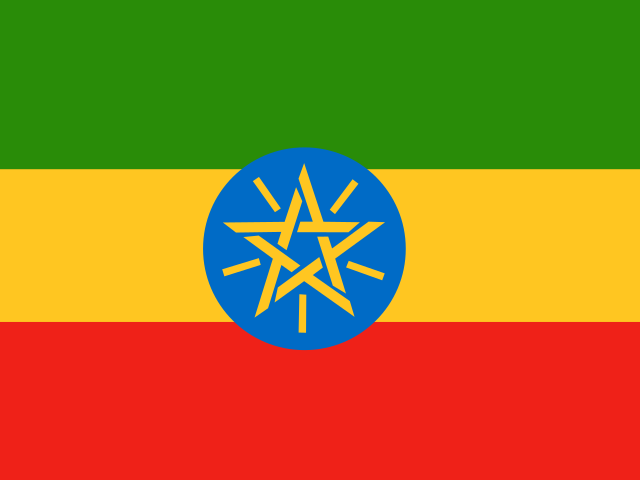
 Ethiopia
Country3 institutions in 2 agglomerations · all countries
About
Profile
Ethiopia is represented in this library by a small group of universities. An Ethiopian organisation is listed here once its researchers have contributed to at least two of the papers in our library. Every institution that currently meets this condition is a university: Bahir Dar University, Addis Ababa University and Addis Ababa Science and Technology University. Among the works here, no Ethiopian research laboratory, company, hospital, ministry or independent institute has yet reached the threshold. On this site, Ethiopian research is therefore university research.
The universities are ordered by the citations that the work of their scientists has drawn, not by the number of papers they have contributed. This order describes only the papers this library holds. It does not measure the size, output or standing of research in Ethiopia as a whole, and it is not a national ranking. A university that does much of its work outside the topics this library covers may appear low here, or not at all, without that saying anything about its actual research. The general index of institutions gives the wider context and lets readers move from Ethiopia to other countries and to other kinds of organisation.
Where the research is based
All the Ethiopian research gathered on this site comes from two cities. Addis Ababa is home to two of the listed universities, Addis Ababa University and Addis Ababa Science and Technology University. Bahir Dar is home to Bahir Dar University. In this library, then, Ethiopian scholarship has one city with more than one contributing university and a second centre with a single one.
This geography follows from the rule for inclusion. A university, college or research body elsewhere in Ethiopia that has contributed only one paper to the collection would not appear in the country list, even though its researchers are present in the library through that paper. The map of Ethiopian research drawn here is a map of the institutions that contribute repeatedly, not of every place where Ethiopian authors work. As more papers are added, further cities may appear and the balance between Addis Ababa and Bahir Dar may change.
The institutions
Bahir Dar University heads the country list. It has contributed fewer papers in our library than Addis Ababa University, but the work done there has attracted more citations in total. Each of its papers has therefore, on average, drawn more attention than the papers of the other Ethiopian universities here. Its first place comes from citation weight, not from volume. Because the gap between it and the university in second place is modest, a small change, such as one well-cited paper added under either name, could alter the order.
Addis Ababa University is second. Among the Ethiopian institutions it has the most papers in the library, which makes it the broadest Ethiopian presence by number of works. In total its papers have been cited somewhat less than those of Bahir Dar University, and that places it just behind in a citation-based order. Taken together, the two universities account for nearly all the attention that Ethiopian work has received on this site, and both can fairly be described as the main sources of Ethiopian research among the works collected here. They show two different profiles: one with fewer papers that are more cited, and one with a larger body of work whose citations are spread more widely.
Addis Ababa Science and Technology University is third. It meets the threshold with a small number of papers, and so far those papers have been cited very little within the library. This does not mean its research lacks interest. Papers that are recent, that come from fields with slower citation habits, or that address narrow questions often take time to be cited. At present the university is a newer or smaller presence in the collection, and its position may change as its work becomes better known or as more of its papers are added.
Reading the ranking
Ordering by citations rather than by number of papers has practical effects that readers should keep in mind. A university with a few strongly cited papers can rank above one with more papers that are cited less, and that is exactly the relation between Bahir Dar University and Addis Ababa University. A university whose papers have not yet drawn citations will rank low however active it is. That may explain the third place of Addis Ababa Science and Technology University.
Citation counts also reflect differences between fields. Some areas of science cite heavily and quickly, while others cite sparingly and over long periods. Without a breakdown of Ethiopian papers by subject, the citation totals cannot show whether one university ranks above another because of the reach of its research or because of the habits of the fields it works in. The order is best read as a description of where cited work in our library has gathered, not as a judgement of quality.
The list is not fixed. When new papers enter the library, or when existing papers gain citations, the figures behind each university change and the order can shift. A university may also join the list once a second paper by its researchers appears. The present picture is a snapshot of Ethiopian research as the collection now holds it.
Research strengths
The country view of Ethiopia does not divide the Ethiopian papers by field, topic or research unit. It names no subject areas or keywords for any of the universities. Assigning particular strengths to Ethiopia on this site would therefore be guesswork, and university names alone are not a reliable guide to what their researchers publish. Readers who want to know what each university studies should open that university's own entry, where its papers can be read and grouped by subject.
Some structural points can still be made. Ethiopian research in the library comes entirely from universities, so the subjects it covers are those pursued by university departments and their staff and students. Most of the citation weight is shared between Bahir Dar University and Addis Ababa University, so any strengths that emerge from a closer reading are likely to be found in the papers of those two institutions. The contribution of Addis Ababa Science and Technology University is small enough that its subjects cannot yet show a clear pattern.
Leading scientists
No individual researchers are named for Ethiopia at country level, so this overview cannot list leading scientists or describe their work. On this site, authors are linked to particular papers and to the institutions where those papers were written. The people behind Ethiopian research can be found through the university entries, where the contributing scientists appear alongside their works.
This arrangement has a consequence worth noting. A researcher who has worked at more than one Ethiopian university, or who has moved between Ethiopia and another country, may appear in several places. Their contributions are counted at the institution where each piece of work was done. A full view of any one scientist's research therefore comes from their own author entry rather than from a single university.
Landmark works
The country view names no individual papers, so the most cited Ethiopian works cannot be described one by one here. The citation totals show only where cited work has gathered: among the Ethiopian universities, the papers of Bahir Dar University have drawn the most citations, closely followed by those of Addis Ababa University, with Addis Ababa Science and Technology University well behind. The specific papers that account for this attention, and what each of them found, are given under the university concerned.
Because Bahir Dar University combines a smaller number of papers with the highest total, it is likely that a few of its works carry much of that attention. Whether that is so, and which works they are, can be checked only in its own list of papers.
Collaborations
No partner institutions, co-authors or foreign countries are shown for Ethiopia at this level. The country view does not reveal whether the Ethiopian universities write papers together, or whether their researchers work with colleagues in other countries. Such joint work, if it exists, would appear in the publication lists of the individual universities, where co-authors and their affiliations are shown with each paper.
The geography does suggest questions a reader might explore. The two universities in Addis Ababa work in the same city, and it would be natural to ask whether their researchers share papers. Links between Addis Ababa and Bahir Dar, and links from either city to institutions abroad, can likewise be traced through the papers each university has contributed. Until those connections are visible, nothing should be assumed about them.
Over time
The country view gives no years for the Ethiopian papers, so the growth of Ethiopian research on this site cannot be traced here. It is not possible to say from this view when the first Ethiopian contributions appeared, whether output has risen or fallen, or whether the balance between the universities has changed. These questions are best answered from each university's list of works, where every paper carries its own date.
What can be said is that the country list itself develops as the collection grows. New papers can raise a university's citation total, bring a new institution above the threshold, or change the order between the universities already listed. A reader returning to this entry later may find a different arrangement from the one described here.
Summary
On this site, research from Ethiopia comes from universities in Addis Ababa and Bahir Dar. Bahir Dar University is first because its work has drawn the most citations, even though it has contributed fewer papers than Addis Ababa University. Addis Ababa University has the largest body of Ethiopian work in the library and is a close second. Addis Ababa Science and Technology University is a smaller contributor whose papers have so far been cited very little. Fields, people, individual papers, partnerships and dates are not given at country level. The entry for each university gives a more detailed view of the work behind this outline, and the general index places Ethiopia among the other countries and institutions in the library.
Where
Agglomerations (2)
Institutions (3)
🎓 Universities (3)
People (2)
Works in our library (15)
- Multilingual and Explainable Text Detoxification with Parallel CorporaDaryna Dementieva, Nikolay Babakov, Amit Ronen, et al.2025 · 19 citations
- Universal Dependencies for AmharicBinyam Ephrem Seyoum, Yusuke Miyao, Baye Yimam Mekonnen2018 · 19 citations
- Introducing various Semantic Models for Amharic: Experimentation and Evaluation with multiple Tasks and DatasetsSeid Muhie Yimam; Abinew Ali Ayele; Gopalakrishnan Venkatesh;, Ibrahim Gashaw;, Chris Biemann2020 · 18 citations
- AmQA: Amharic Question Answering DatasetTilahun Abedissa, Ricardo Usbeck, Yaregal Assabie2023 · 10 citations
- Manually Annotated Spelling Error Corpus for AmharicAndargachew Mekonnen Gezmu, Tirufat Tesifaye Lema, Binyam Ephrem Seyoum, et al.2021 · 3 citations
- The semantics and pragmatics of Amharic spatial expressionsGashaw Arutie Asaye2021 · 2 citations
- The Semantics of Locative Adpositions in AmharicGashaw Arutie Asaye2021 · 1 citation
- Evaluating Machine Translation Datasets for Low-Web Data Languages: A Gendered LensHellina Hailu Nigatu, Bethelhem Yemane Mamo, Bontu Fufa Balcha, et al.2026 · 1 citation
- The developmental realization of ejectives by typically developing Amharic speaking childrenFikre Diress Alamirew, Abebayehu Messele Mekonnen2021
- AmharicStoryQA: A Multicultural Story Question Answering Benchmark in AmharicIsrael Abebe Azime, Abenezer Kebede Angamo, Hana Mekonen Tamiru, et al.2026
- Hate Speech Detection and Classification in Amharic Text with Deep LearningSamuel Minale Gashe, Seid Muhie Yimam, Yaregal Assabie2024
- The Political Reform and the Amharic Biweekly Reporter: The Editorial Contents of the Reporter Newspaper in Ethiopia from 2017 to 2019Negesse Gessese2020
- Stylistic Motivation in Amharic Media Language UseA.M. Mekonnen, E. Hussien2023
- Reflections on Abu Rumi’s Amharic Translation of the Book of RuthMeley Mulugetta2012
- SAINT: Multilingual Span-Level Interpretability for Sentiment AnalysisSeid Muhie Yimam, Tadesse Destaw Belay, Robert Geislinger, et al.2026
Topics
Semitic languages (14) Question answering (2) Sentiment & emotion (2) Multilingual & cross-lingual NLP (2) Evaluation & benchmarks (2) Universal Dependencies (1) Machine translation (1) Low-resource languages (1) Hebrew & Aramaic (1) Interpretability (1) Bias, fairness & safety (1)
Fields
Linguistics & languages (13) Machine translation (2) Natural language processing (2)
Works by year
This page in Markdown → https://md.research.elamur.ai/free/en/countries/ethiopia/